In mathematics, a limit is the value that a function (or sequence) approaches as the argument (or index) approaches some value. [1] . Limits of functions are essential to calculus and mathematical analysis, and are used to define continuity, derivatives, and integrals.
We want to give the answer "2" but can't, so instead mathematicians say exactly what is going on by using the special word "limit". The limit of (x 2 −1) (x−1) as x approaches 1 is 2. And it is written in symbols as:
In this section we will introduce the notation of the limit. We will also take a conceptual look at limits and try to get a grasp on just what they are and what they can tell us.
limit, restrict, circumscribe, confine mean to set bounds for. limit implies setting a point or line (as in time, space, speed, or degree) beyond which something cannot or is not permitted to go.
This page covers the fundamental concepts of limits in calculus, essential for analyzing function behavior. It explains how to estimate limits using numerical and graphical methods, distinguishing …
Limit, mathematical concept based on the idea of closeness, used primarily to assign values to certain functions at points where no values are defined, in such a way as to be consistent with nearby values.
What is a Limit? Remember Both parts of calculus are based on limits! The limit of a function is the value that $$f (x)$$ gets closer to as $$x$$ approaches some number. Examples
There are a number of different methods used to find the limit of a function, including substitution, factoring, rationalization, the squeeze theorem, and more. Substitution is a method that involves evaluating the function at the point of interest.
In many commonly-encountered scenarios, limits are unique, whereby one says that is the limit of and writes. On the other hand, a sequence of elements from an metric space may have several - even infinitely many - different limits provided that is equipped with a topology which fails to be T2.
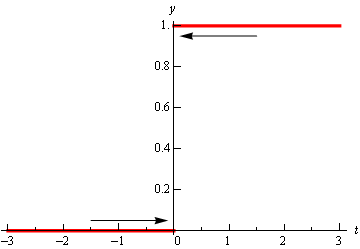 In this section we will introduce the notation of the limit. We will also take a conceptual look at limits and try to get a grasp on just what they are and what they can tell us.